A new report, the “U.S. Sustainable Design Report”[2] from Metropolis and Interface, provides a sustainable snapshot for U.S. architecture and design in 2025 and 2026. The report outlines perspectives on the industry at large, the perspectives that support it, and the specification data that outlines a realistic picture of sustainable architectural products.
It is an architectural responsibility to understand the environmental impacts of contributing to the built environment, which accounts for 42 percent of global carbon emissions. Understanding the industry’s mindsets, challenges, and strengths better equips architects with the knowledge they need to promote progress.
Estimations informing a sustainable snapshot
A strong point of emphasis in the report is the lack of a universal, recent, and credible metric for evaluating sustainability in the American built environment; a compiled certification-tracking database does not yet exist.
Jaxson Stone explains that adding up the reported square footage certified across LEED, WELL Standard, Green Globes, and Living Future projects accounts for less than three percent of American building square footage. However, this compilation does not account for an overlap in certifications.
The data, derived from each certifying organization’s self-publicized numbers, shows the amount of certified space in the American built environment:
Nearly 771.1 million m2 (8.3 billion sf) is LEED Certified.
More than 74.3 million m2 (800 million sf) is WELL Certified.
Nearly 69.7 million m2 (750 million sf) is Green Globes Certified.
278,709 m2 (3 million sf) is Living Future Certified.
It is also important to note that a large proportion of buildings were constructed before many current standards were put into place, and more often than not, it is a more sustainable choice not to rebuild or renovate pre-existing functional structures, barring health and safety risks or significant energy inefficiency.
Regardless, the proportion of buildings that can be classified as sustainable across the U.S. is undeniably small. Certification numbers, however, do not necessarily reflect the number of green designs; given the guidelines, they may often be followed without clients wanting to pay for certification.
Increasing uncertainty in AI for sustainability
Between 2024 and 2025, confidence in both AI’s capabilities for industry enhancement and in the company’s decision-making surrounding AI has dropped by nine percent. At the same time, 13 percentage points more design leaders report AI is the top sustainability enabler.
Impacts across the industry
In METROPOLIS’s 2025 Sustainable Design Survey, 400 industry professionals spanning broad company types, firm sizes, roles, and age ranges, with the largest proportion of respondents, 41 percent, aged 30-45. Respondents reported varying levels of influence on project sustainable outcomes, with the largest proportion, 35 percent, reporting moderate influence, and only one percent reporting no influence. Sixty-four percent note that sustainability considerations often or almost always impact project decisions, and 67 percent report being comfortable or very comfortable applying sustainable principles in daily work. This data offers a positive environmental outlook on the mindsets, abilities, and knowledge guiding today’s designs.
For architects, sustainability can only go as far as the client wishes. In fact, respondents attribute the greatest improvement in design sustainability to client education and demand. Making sustainability information available to clients on all accounts, from large-scale developers to small-scale homeowners, drives sustainable designs. As a joint effort across the built environment, making information public and easily accessible helps building owners better understand how sustainable designs or building specifications can benefit them long-term, whether it be cost-efficient operations, tax rebates, or a reduced need to replace or excessively maintain materials.
In terms of specifications, only 15 percent report rarely or almost never being able to incorporate sustainable materials into designs. This means the vast majority—85 percent—can specify sustainable materials, sometimes, often, or almost always.
Circularity is an increasingly prevalent buzzword across the design industry[3], essentially forming a zero-waste approach by maximizing the renewable lifespan of products and adapting them further into designs. Metal is an excellent example of this concept in practice; for example, aluminum railings are often made from recycled aluminum products, have a long lifespan, and are largely recyclable once their lifespan has come to an end.
Circularity is an increasingly prevalent buzzword across the design industry: https://www.metalarchitecture.com/articles/columns/constructive-insights-circularity/
Greenbuild International Conference and Expo 2025, held in Los Angeles in early November, delivered a rich convergence of familiar themes, sustainable design, high-performance operations, and community-scale planning, alongside a pronounced push into emerging territories: circularity and embodied-carbon frameworks, digital twins and artificial intelligence (AI), and, most notably for the industry, the embedding of resilience across pre-design, construction, and operations.
The recent event marked a pivotal moment: the debut of the newly released LEED version 5 (v5) rating system, a comprehensive overhaul that integrates climate-risk assessment, embodied-carbon accounting, and social equity directly into the certification framework.
LEED v5, circularity, carbon, and intelligent systems
The conference sessions and exhibition hall reflected a mature, systems-based understanding of sustainability. LEED v5 introduces new credits that require teams to assess a project’s vulnerability to hazards such as extreme heat, flooding, and wildfire. A resilience assessment performed in the pre-design phase helps teams not only identify hazards but also consider and prioritize resilient design and operations strategies. The Resilient Design Summit, a full-day pre-conference session, emphasized this expanded practice with an overview of the assessment process, followed by panel presentations on designing for specific hazards, including wildfire, extreme heat, and flooding. Overall, the summit highlighted the benefits of resilient design, highlighting occupant safety and well-being, continuity of operations, and preservation of asset values.
Circularity and embodied carbon were also recurring themes. Across various sessions, speakers emphasized that the climate impact of a building begins before occupancy, extending to the extraction, manufacturing, and transportation of materials used in its construction. Increasingly, project teams are asked to demonstrate not only performance in operation but also in reuse and
end-of-life recoverability.
Technology rounded out the picture. A pre-conference summit and several sessions explored how AI and digital twins are transforming the design process, providing predictive analytics for energy, carbon, and resilience. Presenters showcased AI-driven design platforms that integrate live climate modeling, hazard data, and material databases, enabling architects and engineers to quickly test multiple scenarios and make more resilient, low-carbon decisions. They also discussed digital twin applications to optimize asset management and building operations.
Resilience moves to the center
Resilience was a major thread that ran through Greenbuild 2025. From the Resilient Design Summit that opened the week to the inspiring closing keynote conversation, “The Intersection of Climate, Equity, and Community Empowerment,” nearly every discussion acknowledged that sustainability without resilience is incomplete.
Sessions such as “Resilience in Design: Integrating Future Climate Data into Practice” emphasized that designing for historic weather no longer suffices. Modeling future heat, rainfall, and wind conditions using downscaled climate data must become a standard practice.
For architects, this evolution represents a new standard of care: understanding climate risk and communicating this to clients is now a professional obligation. For owners, it is an essential component of asset risk management and insurance strategy. One session, “The Resilience Dividend: Unlocking Insurance–Real Estate Synergies,” explored how resilience planning can reduce premiums and increase property value by lowering risk exposure.
Designing for thermal safety as heat risks rise
Of all climate risks, extreme heat drew particular attention. In sessions such as “Don’t Sweat It: Designing for Extreme Heat and Resilience” and “From Wildfires to Floods: Integrating LEED v5 Climate-Risk Assessment into Design,” experts warned that prolonged heat waves, combined with grid instability, pose the most immediate threat to occupant health and continuity of operations.
The concept of thermal resilience, also referred to as thermal safety, was highlighted as a critical new design performance metric. The goal is not only comfort but survivability, maintaining safe indoor temperatures when power and cooling fail. Presenters shared modeling of the combined benefits of passive strategies (high-performance envelopes, shading, reflective materials, cross-ventilation) as well as mechanical redundancy, such as battery-backed ventilation fans to maintain safe indoor conditions. This aligns with LEED v5’s new “Resilient Spaces” credit that includes a thermal safety option, encouraging designers to designate and design interior areas that maintain habitable temperatures during extended power outages or heat emergencies.
One important takeaway: thermal resilience must be designed, not assumed. A building may meet the code-required thermal performance yet still reach unsafe indoor temperatures during a multi-day heatwave.
This emphasis on heat safety also reinforces the growing intersection between sustainability and public health, linking energy efficiency, occupant well-being, and climate adaptation in a single performance narrative.
Schools and community anchors as resilience hubs
A second powerful thread running through the conference was the connection between resilience and equity, most visibly illustrated in sessions such as “Resilient Community Anchors: A Home, A Church, A Bank, A School” and “Designing for Resilience and Equity: Climate-Ready Schools in Practice.”
Speakers described how everyday institutions, especially schools, can serve as “resilience hubs” during and after disasters. When designed with robust envelopes, redundant systems, and community-accessible layouts, schools can provide safe refuge during extreme heat, smoke events, storms, and power outages. They also function as trusted community centers for communication, relief distribution, and emotional recovery.
In the Los Angeles Unified School District’s Climate-Ready Schools initiative, new and renovated campuses incorporate high-albedo roofs, shaded outdoor learning spaces, micro-grids, and enhanced air filtration.
Faith institutions, as well as businesses such as restaurants and banks, were similarly cited as potential resilience anchors, especially in under-resourced communities. The common denominator: community cohesion, familiarity, and trust are as important as resilient infrastructure to create resilience. These presentations were a perfect example of why the new Human Impact Assessment prerequisite was added to LEED v5.
A converging agenda for architects and builders
For the architecture and construction community, the message from Greenbuild 2025 was unambiguous:
Integrate climate-risk assessment early. Factor future heat, storm, and fire data into concept design.
Pursue circularity and low-carbon materials. Track embodied carbon and design for deconstruction and reuse.
Adopt AI and digital twins. Use data to predict and optimize performance, maintenance, and resilience outcomes.
Prioritize occupant safety. Design for passive survivability and indoor environmental quality during disruptions.
Think at the community scale. View projects as part of resilience networks, not isolated assets.
Closing reflection
As architecture, engineering, and design professionals move into 2026, it is critical to recognize that sustainability, equity, and resilience have merged. Designing for carbon emissions reduction, circularity, and community are now inseparable goals. This message is reinforced by the memory of the devastating Southern California urban conflagration earlier in 2025, with communities still grappling with the loss and working on recovery.
With these insights, every project can contribute to a safer and more adaptable built environment.
Alan Scott, FAIA, LEED Fellow, LEED AP BD+C, O+M, WELL AP, CEM, is an architect and consultant with more than 36 years of experience in sustainable building design. He is the director of sustainability with Intertek Building Science Solutions in Portland, Ore. To learn more, follow him on LinkedIn at www.linkedin.com/in/alanscottfaia/[2].
Light Shines Through an Art Deco Aluminum Interior
by hanna_kowal | April 1, 2026 9:12 am
[1]Photos by Anton Grassl
Art Deco defines the style of 75 State Street in Boston, Mass., embodied by a pre-existing stylish facade. A recent installation showcases the artistic capabilities of metal, creating a welcoming common area within this 31-story office space and meeting the challenge of matching the essence of the exterior’s aesthetic within. Stemming from a collaboration between NELSON Worldwide and Móz Designs, this 72-panel, eye-catching wall uses its pattern to evoke the movement of birds in flight.
[2]Photos by Anton Grassl
The medium bronze-hued grounding focal point uses 130.9 m2 (1,409 sf) of custom aluminum 3.2 mm (0.13 in.) panels, featuring distinct chevron patterns that complement the structure’s exterior patterns. To unlock the potential for a glowing aesthetic, the distinct perforations were precision-laser-cut. Backlighting complements the aesthetic perforations with an LED lighting system, allowing the installation to act as a living art piece with custom lighting colors that can support different palettes and seasons. A concealed fastening system provides a seamless look while custom brackets ensure the installation does not conflict with the pre-existing setting. With its warm-toned metal color, dynamic backlighting capabilities, and chevron pattern that offers an appealing nod to nature, this installation revitalizes the 75 State Street[3] common area with immense visual interest.
Steel, Engineering, Design, and Detailing: A Multidisciplinary Merger
by hanna_kowal | March 31, 2026 9:11 am
[1]Celebrating the opportunities of the new merger, photographed are Stephen DeSimone PE, chairman and CEO of DeSimone Consulting Engineering (right) and Constructive Engineering Design (CED) founder and president Michael Farrahi (left) Photo courtesy Desimone Consulting Engineering
Global consulting firm DeSimone Consulting Engineering has merged with Constructive Engineering Design (CED), a Kansas-based firm providing expert services in steel procurement, structural engineering, structural connection design, and detailing. The multidisciplinary merger includes CED’s Steel Frame Alliance division, which offers design-supply steel fabrication services tailored to steel and concrete structures.
DeSimone’s alignment with CED deepens the firm’s level of expertise and augments capacity across a number of service practices, including steel procurement, detailing, and fabrication-ready modeling. The merger amps up the DeSimone portfolio across key project types, including data centers, advanced manufacturing projects, and transportation facilities, including rail stations, aviation hangars, and terminals.
“Bringing Constructive Engineering Design under the DeSimone banner advances our strategy to build a comprehensive, multidisciplinary platform—further empowering us to deliver unmatched technical expertise to meet our clients’ evolving needs,” says Stephen V. DeSimone, PE, chairman and CEO of DeSimone Consulting Engineering. He adds, “With CED’s expertise, we expand our capabilities in steel procurement, detailing, fabrication-ready modeling, and connection design, offering our clients greater speed, value, and innovation for project types ranging from data centers to advanced manufacturing facilities. With CED and the Steel Frame Alliance joining the DeSimone team, we deepen and enhance a service model emphasizing efficient, in-house collaboration across specialized services and practices.”
Since its founding in 1992, CED has become a national leader in structural engineering and fast-track services across commercial, residential, and institutional sectors. Recent projects include providing connection engineering services for The One in Toronto—Canada’s tallest tower at 308.5 m (1,012 ft), as well as structural engineering, detailing, and steel procurement and fabrication for the expansion of a major distribution center for greeting card giant Hallmark in Liberty, Mo.
CED also provided structural engineering, detailing, and steel procurement for the 195,096.4 m² (2.1 million sf) Optima Camel View Village luxury condominium[2] complex, which consists of 11, seven-story buildings with a three-level underground parking garage in Scottsdale, Ariz. At 50 Hudson Yards, the 58-story commercial office tower that forms part of the transformative, 28-acre Hudson Yards development by Related Companies in Manhattan, CED completed connection engineering, value engineering, and shop drawing review for compliance with connection design, as well as assisting with the management of the steel package, including detailing, steel procurement, and fabrication-ready modeling for over 27,215.5 metric tons (30,000 tons) of structural steel.
Additional projects include the design and supply of structural steel for the $450 million, 4,738.1 m² (51,000 sf) CMC Steel B01 Mill Building in W. Va., the 28,985.7m² (312,000 sf) Alura Smelter Expansion in Port Madrid, Argentina, and connection design for 731 Lexington Avenue, a 57-story, mixed-use tower in Midtown Manhattan.
CED founder and president Michael Farrahi says, “We built CED with a commitment to scientific integrity, technical excellence, and unmatched client service. Joining DeSimone allows us to amplify that mission on a global scale. Together, we will deliver deeper expertise, broader resources, and innovative solutions for the complex technical challenges our clients face.” Farrahi will be a managing principal overseeing DeSimone’s Overland Park office and team.
The merger continues DeSimone’s strategic expansion focused on strengthening its multidisciplinary capabilities and extending its global reach—and complementing its global structural engineering, facade and building envelope consulting, vertical transportation, wind and vibration analysis, project controls, and construction consulting, and more. Expanding capacities for integrated metal supply in the consulting, design, and engineering stages of projects, this merger highlights the expanded capabilities offered by industry growth and connection.
Can You Make the Most of Modern Facade Designs with Metal Composite Material (MCM)?
by hanna_kowal | March 30, 2026 9:10 am
[1]Photo courtesy CEI Materials
Designing modern facade designs with metal composite material (MCM) unlocks countless opportunities for performance and aesthetics.
Take this quiz to challenge your understanding of functional and aesthetic considerations for designing with MCM, based on our article, “Design Smarter with MCM.”[2]
[1]Ceilings can be so much more than a flat surface overhead. Clever metal ceiling designs can contain key building systems and foster an elevated appearance in an otherwise unused space.
This quiz explores strategies for creating metal ceiling designs that perform visually and functionally based on our article, “Metal Ceiling Considerations.”[2]
 [1]
[1]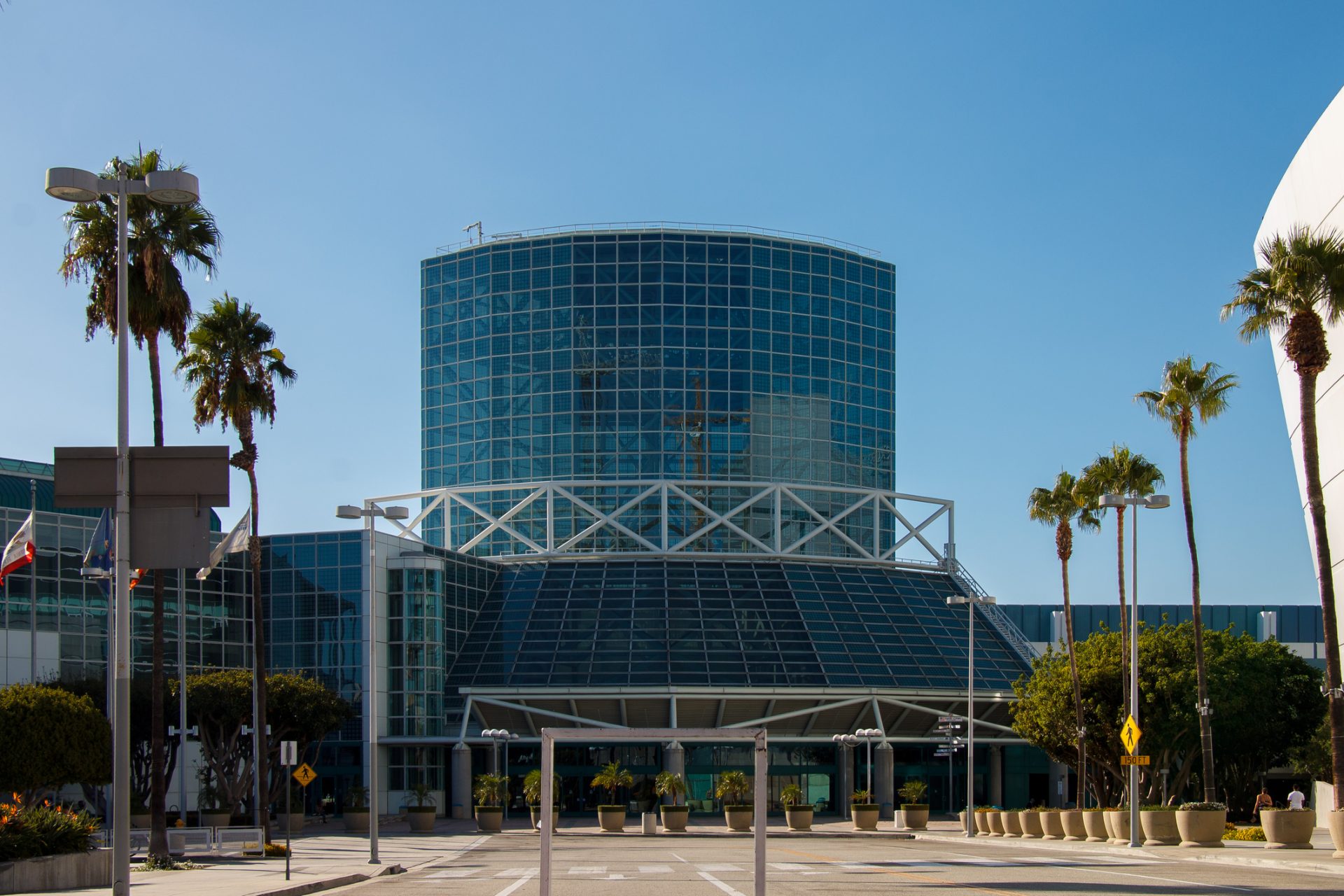 [1]
[1]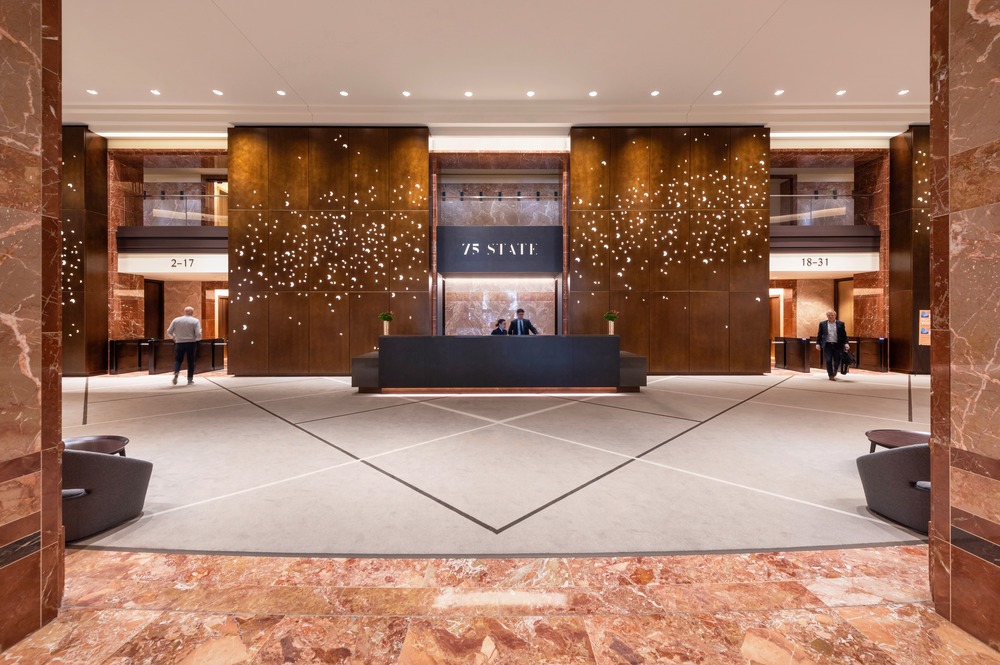 [1]
[1]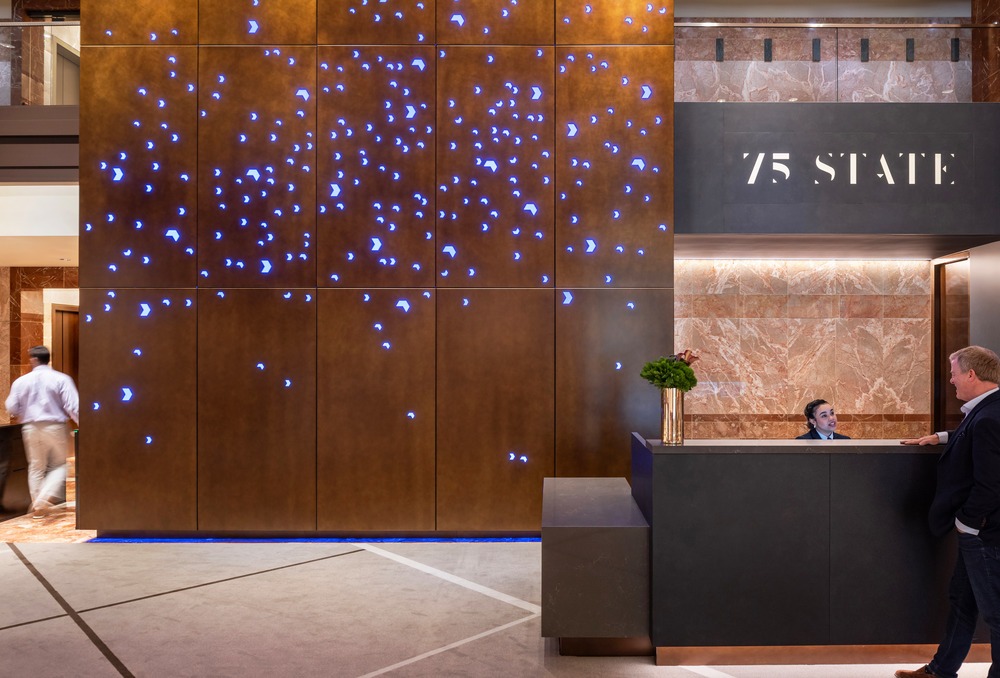 [2]
[2]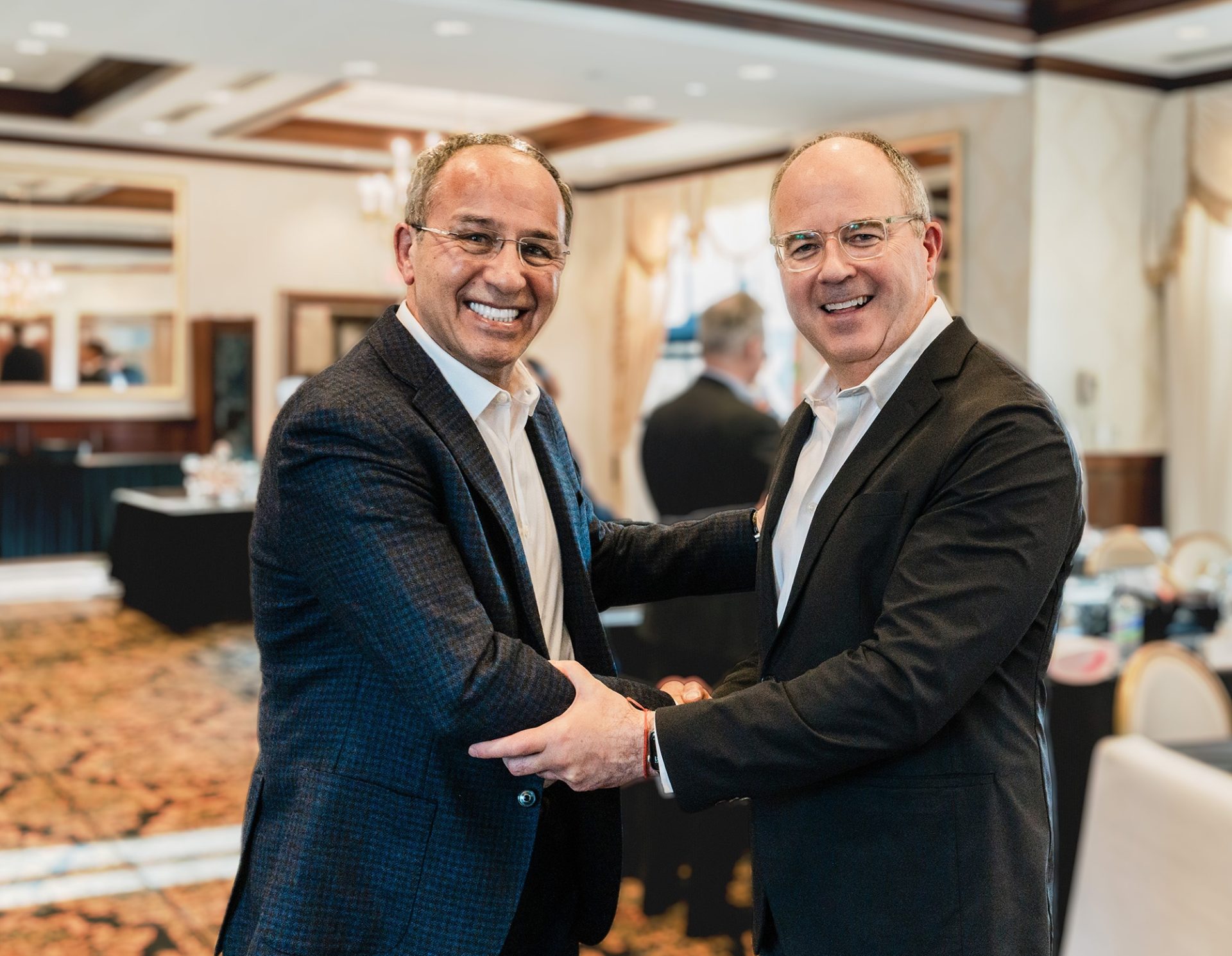 [1]
[1]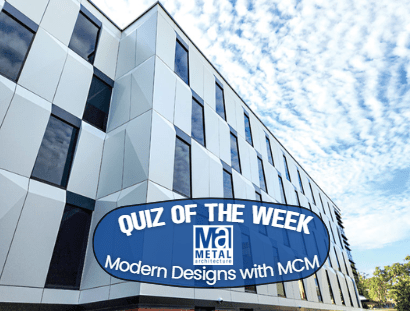 [1]
[1]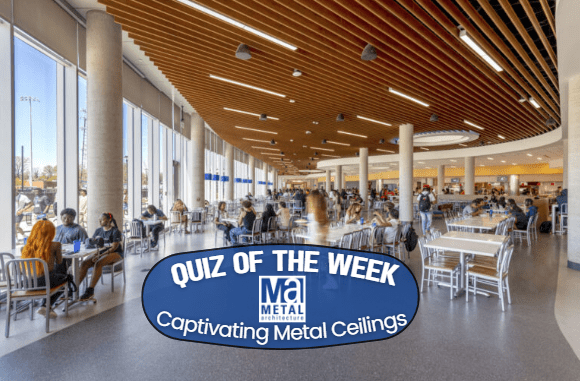 [1]Ceilings can be so much more than a flat surface overhead. Clever metal ceiling designs can contain key building systems and foster an elevated appearance in an otherwise unused space.